

Family members or friends often snore in their sleep, but is it normal for children to snore? Snoring in children can be a sign of pediatric sleep apnea, leading to poor sleep quality, daytime inattention, learning difficulties, and behavioral problems. In severe cases, it can even be life-threatening. Why do children get sleep apnea? What are the treatment options? In this article, Dr. Ng Kwok Keung, a specialist in pediatric respiratory medicine at Hong Kong Sanatorium & Hospital, addresses various questions about pediatric sleep apnea.
What is pediatric sleep apnea? Persistent snoring requires attention!
According to the Hong Kong Society of Paediatric Respirology and Allergy, 10 to 15 out of every 100 children experience persistent snoring, and 1 out of every 4 children with persistent snoring has pediatric sleep apnea. A study by the Chinese University of Hong Kong's Faculty of Medicine indicated that 5% of school-aged children in Hong Kong suffer from obstructive sleep apnea, with most exhibiting persistent snoring.
Dr. Ng Kwok Keung, a specialist in pediatric respiratory medicine at Hong Kong Sanatorium & Hospital, points out that occasional snoring during sleep in children is normal. However, frequent snoring, meaning more than three nights a week or persistent snoring, is a common symptom of sleep apnea. Besides persistent snoring, other symptoms of sleep apnea include excessive sweating during sleep, teeth grinding, mouth breathing during sleep, noticeably loud breathing, and bedwetting. In daily life, affected children may feel particularly tired in the mornings because sleep apnea significantly impacts sleep quality, leading to reduced concentration, irritability, hyperactivity, and can also affect the secretion of growth hormones, causing them to be shorter than their peers. Dr. Ng emphasizes that even if a child does not snore, they may still have sleep apnea. Parents should carefully observe if their child exhibits any of the aforementioned symptoms, and if there are any suspicions, they should seek medical attention and examination promptly.
Which children are at high risk for the condition? Symptoms can appear as early as 1 year old
Dr. Ng further explains that children with allergic rhinitis, those who frequently breathe through their mouth, obese children, and those with small mandibles are all at high risk for sleep apnea. Additionally, genetic factors can contribute to the condition; if parents or grandparents have sleep apnea, the next generation is more likely to be affected.
Symptoms of pediatric sleep apnea can be noticed as early as 1 year old, such as frequent nasal congestion, mouth breathing, and snoring sounds during breathing. By 2 to 5 years old, as the tonsils grow larger, the symptoms become more apparent and severe. Some patients may even experience breathing difficulties, growth delays, and emotional problems, affecting the child's overall health and development.
Differences between pediatric sleep apnea and adult sleep apnea
The causes differ. Pediatric sleep apnea is primarily due to enlarged tonsils, while adult sleep apnea is mainly caused by obesity, and less often by tonsil issues. Besides affecting daytime concentration and causing emotional problems, similar to pediatric sleep apnea, adults also frequently feel drowsy and sleepy.
How is this condition diagnosed in children?
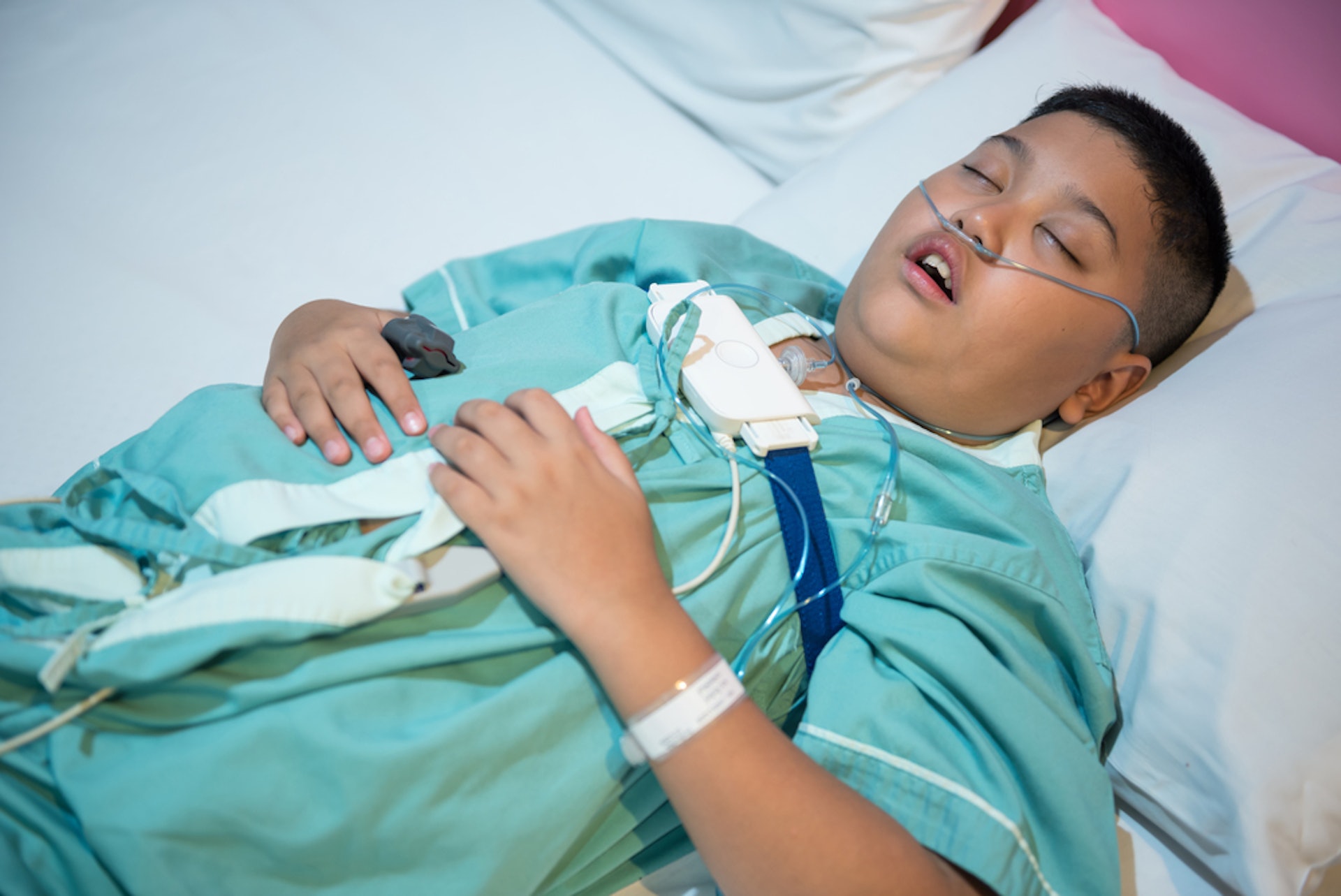
Dr. Ng states that if parents suspect their child has sleep apnea, they can take them to the hospital for a sleep study. Instruments will be attached to the child's head and body to record and test electroencephalograms (EEG) and electrooculograms (EOG) during sleep, as well as measure respiratory airflow, chest and abdominal movements, apneic episodes, blood oxygen saturation, heart rate, and more. Doctors will then use the collected data to determine if the child has sleep apnea.
6 Common Causes and Treatment Methods for Pediatric Sleep Apnea
Once a child is diagnosed with sleep apnea, doctors use a sleep endoscopy to identify the cause. Common causes are related to the nasal turbinates, tonsils, and uvula. The doctor will then determine the appropriate treatment method based on the specific cause of the condition.
Cause 1: Allergic rhinitis, swollen nasal turbinates
Treatment method: First treat allergic rhinitis; once the symptoms of allergic rhinitis are managed, the sleep apnea problem will also alleviate.
Cause 2: Enlarged tonsils
Treatment method: Surgical removal of the tonsils.
Cause 3: Frequent mouth breathing causing the tongue to fall backward and obstruct the airway
Treatment method: Teaching the patient exercises to improve oral muscle strength, or using a chin strap to forcibly keep the mouth closed.
Cause 4: Small mandible causing the tongue to collapse
Treatment method: Ordering a custom dental splint from a dentist to wear between the upper and lower teeth, which pulls the mandible forward to clear the airway and prevent the tongue from collapsing and obstructing it.
Cause 5: Narrow nasal cavity
Treatment method: Maxillary expansion surgery performed by a dentist.
Cause 6: Multilevel obstruction (including bone, muscle, and soft tissue structural problems)
Treatment method: Primarily using a Continuous Positive Airway Pressure (CPAP) device to help the patient breathe normally.
Many people believe that snoring during sleep is normal, and some patients don't even realize they snore, thus overlooking its severity! Dr. Ng reminds that delayed treatment for pediatric sleep apnea can have serious consequences. Research also shows that it increases the risk of developing high blood pressure and cardiovascular disease in adulthood. Parents should pay close attention to their children's sleep patterns, and look for any unusual behaviors or emotions, as these could be warning signs of pediatric sleep apnea. If there are any suspicions, seek medical attention as early as possible to avoid delaying treatment.
Original URL: Hong Kong Sanatorium & Hospital Tells You 丨 Don't Underestimate Snoring in Children! It Could Be Sleep Apnea Affecting Height and Academic Performance | Hong Kong 01 https://www.hk01.com/article/874599?utm_source=01articlecopy&utm_medium=referral